


I tried to e-file my taxes and got rejected because a return had already been filed with my Social Security number. I definitely didn't file it. I'm panicking. What do I do now, and how do I stop this happening again next year?
Someone filed a tax return in my name: what do I do?
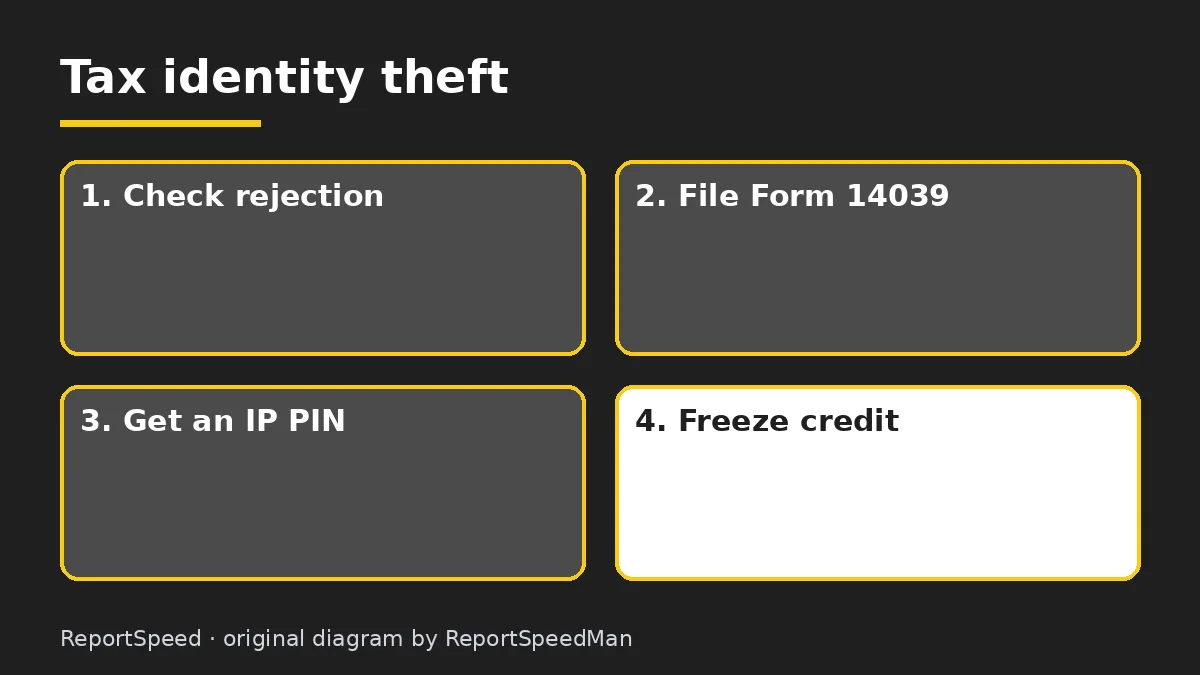
Concerns & risks
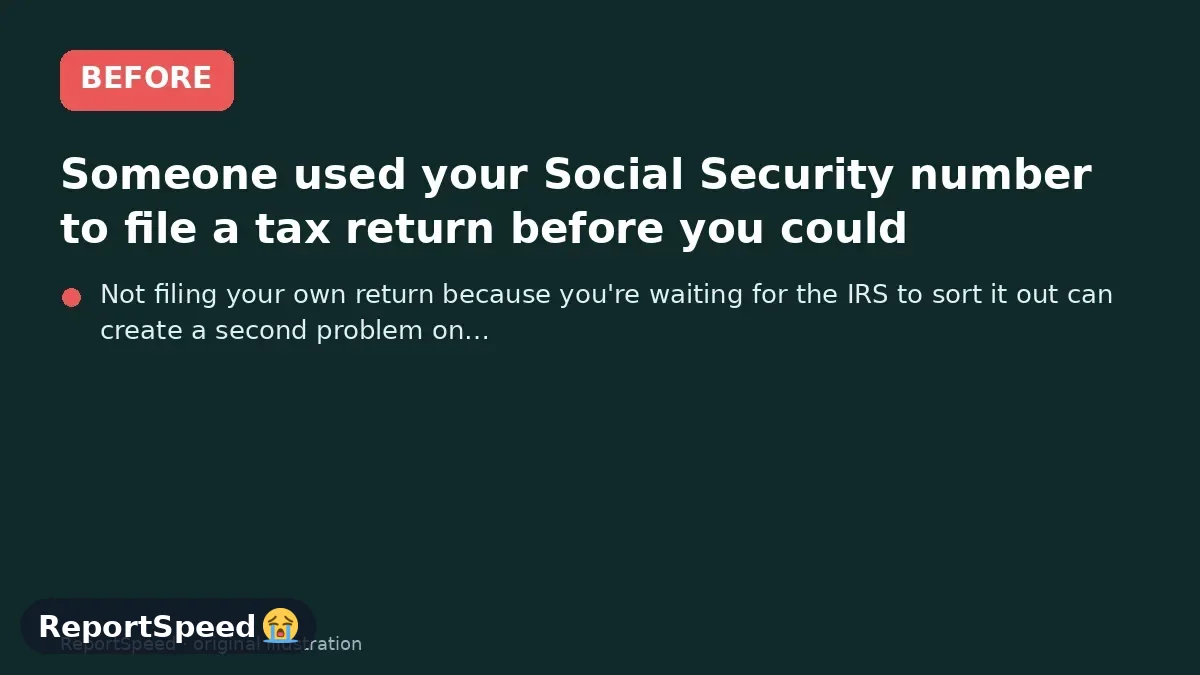
Someone used your Social Security number to file a tax return before you could.
| Need | Where |
|---|---|
| Report to IRS | Form 14039 |
| Block future fraud | IP PIN via IRS online account |
| Recovery plan | IdentityTheft.gov |
| Stop new credit | Freeze at three bureaus |

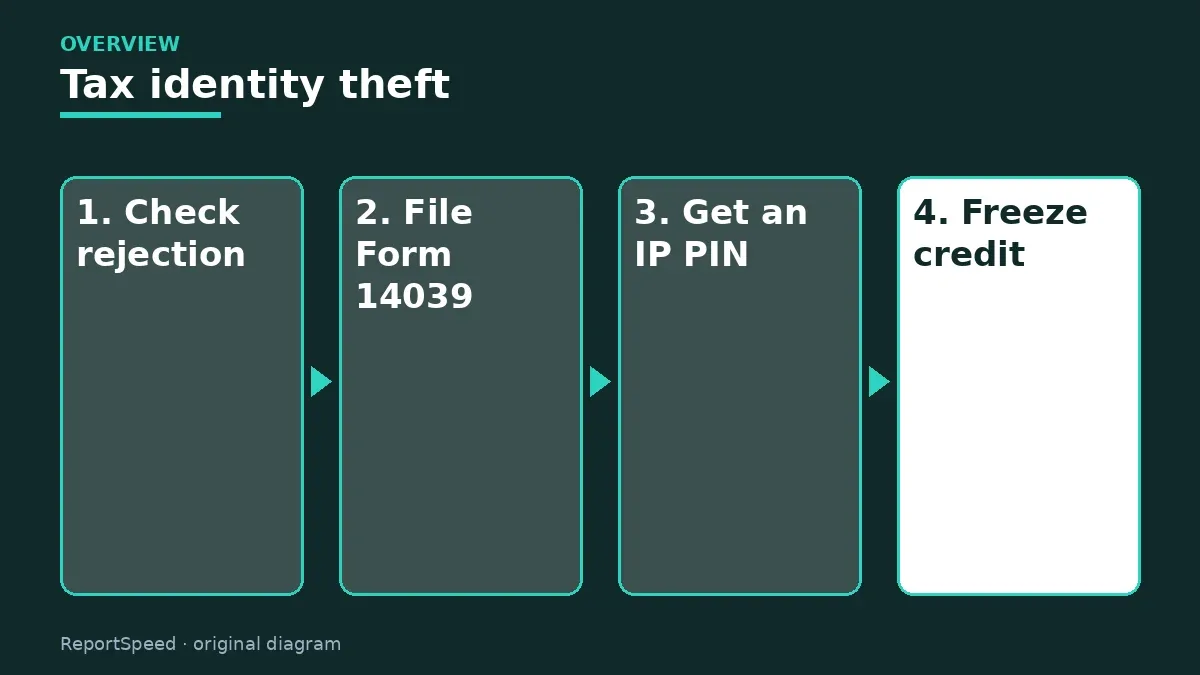
Causes & evidence
The IRS explains that tax-related identity theft happens when someone uses your stolen Social Security number to file a return and claim a refund. If your e-filed return is rejected because of a duplicate filing and you suspect identity theft, the IRS says to complete Form 14039, Identity Theft Affidavit, and attach it to your paper tax return, then mail it as instructed. You should keep filing and paying any tax you owe while the case is worked. The IRS also offers an Identity Protection PIN, a six-digit number that helps prevent someone else filing a return with your SSN, and anyone who can verify their identity can request one. Because a stolen SSN can be misused elsewhere, IdentityTheft.gov can help you build a wider recovery plan.
If you receive an IRS letter about suspected identity theft, follow the instructions in that letter, which may differ from filing Form 14039 yourself. Verify any letter by checking IRS.gov rather than calling numbers in unexpected emails.

Not filing your own return because you're waiting for the IRS to sort it out can create a second problem on top of the first.
What to do

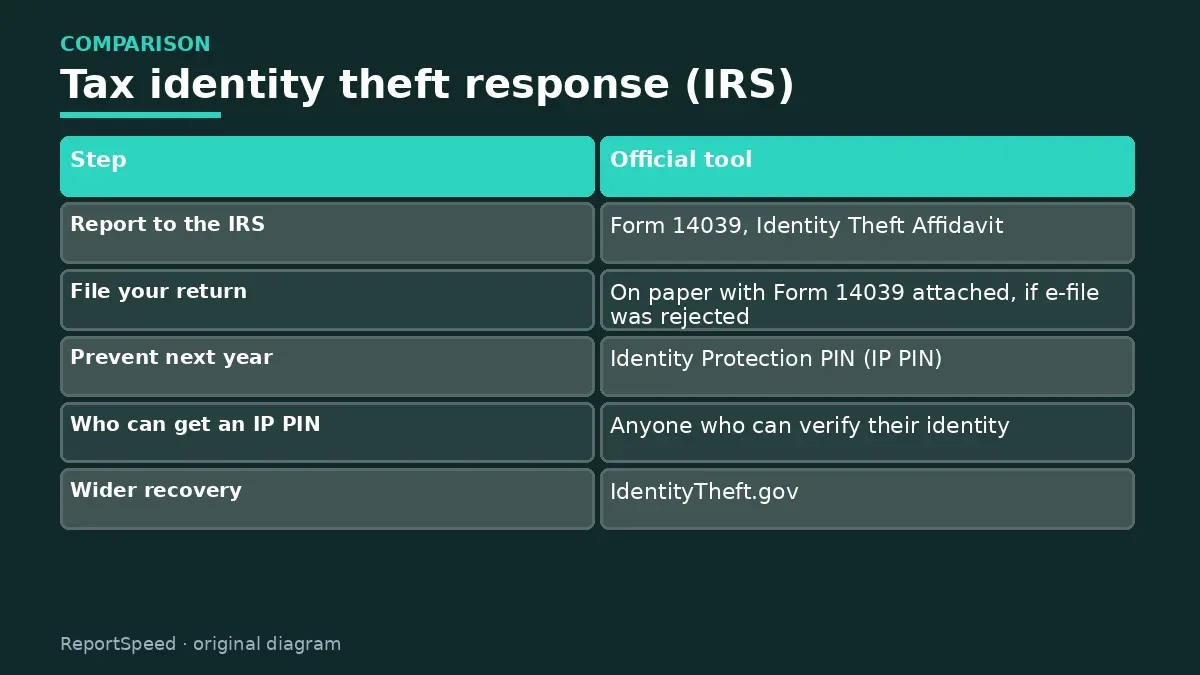
| Step | Official tool |
|---|---|
| Report to the IRS | Form 14039, Identity Theft Affidavit |
| File your return | On paper with Form 14039 attached, if e-file was rejected |
| Prevent next year | Identity Protection PIN (IP PIN) |
| Who can get an IP PIN | Anyone who can verify their identity |
| Wider recovery | IdentityTheft.gov |
- Confirm the rejection code says a return was already filed with your SSN.
- Complete Form 14039 and attach it to your paper return, following the IRS mailing instructions.
- Request an IP PIN through your IRS online account.
- Report the theft at IdentityTheft.gov for a recovery plan.
- Consider freezing your credit with the three bureaus.
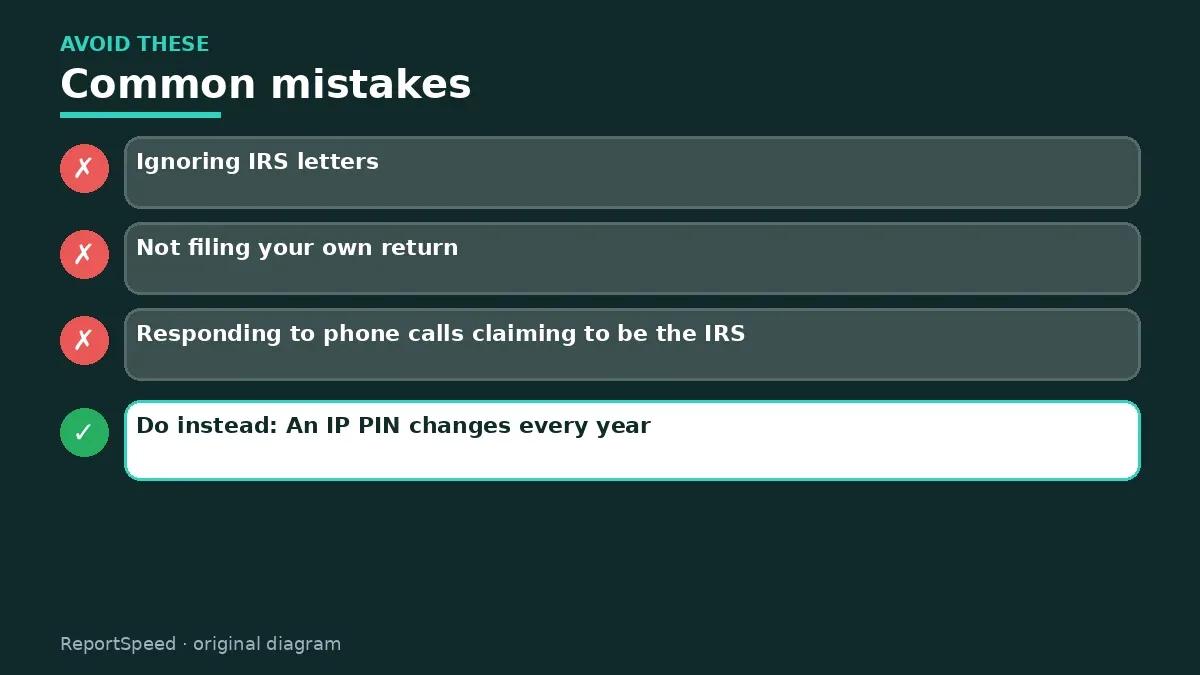
Common mistakes:
- Ignoring IRS letters
- Not filing your own return
- Responding to phone calls claiming to be the IRS
ReportSpeedMan tip: An IP PIN changes every year. Keep the latest one somewhere safe so your tax software or preparer can use it.
What I would actually do
I'd file Form 14039 with my paper return the same week, then sign up for an IP PIN and freeze my credit so the stolen SSN is harder to use elsewhere.
The trade-off people miss: resolving tax identity theft can take months, so any refund will likely be delayed. Filing your own return promptly still matters.
Proof that it worked
The IRS has your affidavit, your return is processed and you have an IP PIN for next year.
Quick FAQ
Does the IRS call or email about this?
It generally starts with mail.
How long does it take?
It can take months.
Do I need an IP PIN every year?
A new one is issued each year.
Wrap-up: File Form 14039, keep filing your own return and get an IP PIN. That covers the immediate fix and helps prevent a repeat.
Wiki: Identity Theft Recovery Steps and Phishing.
Someone filed a tax return in my name: official sources I checked
Step-by-step photos
1. Before The problem 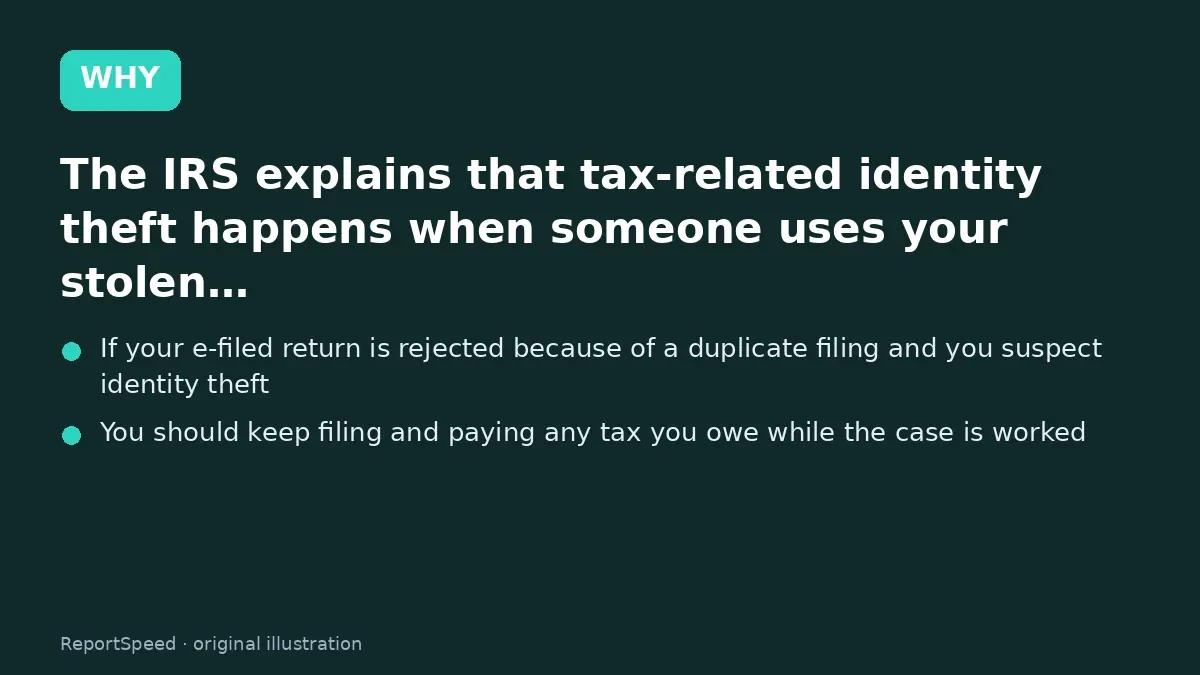
2. Why it happens The cause 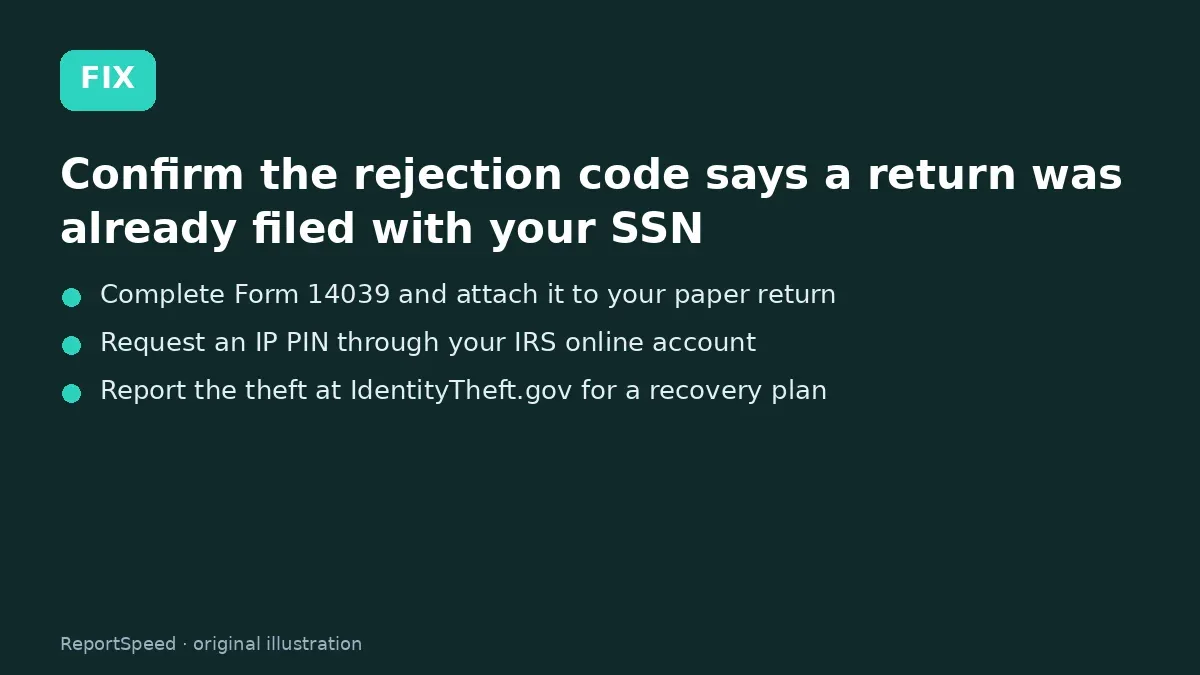
3. The fix The fix 
4. After The result
⚡ Speed Summary
- File Form 14039, keep filing your own return and get an IP PIN.
- An IP PIN changes every year. Keep the latest one somewhere safe so your tax software or preparer can use it.
- Not filing your own return because you're waiting for the IRS to sort it out can create a second problem on top of the first.

Was this answer helpful?
Tap a star to rate this answer.
Related questions
Found an error on my credit report? How to dispute it step by step
Dispute with each bureau and the furnisher, include proof, and expect results in about 30 days.
Rate itSolved
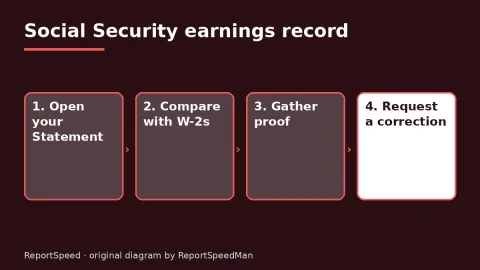
How do I check my Social Security earnings record and fix a mistake?
Check your Statement every year, match it to your W-2s, and correct gaps with proof before the usual window closes.
Rate itSolved

How long should I keep tax records? The IRS 3-, 6- and 7-year rules
Three years covers most returns; six, seven or forever apply in specific cases.
Rate itSolved
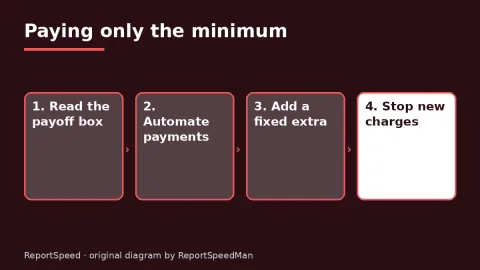
What happens if I only pay the minimum on my credit card?
Minimum payments keep you current but stretch the debt for years.
Rate itSolved
Real experiences
No experiences yet. Be the first to share.