


My father-in-law is 71 and has high blood pressure. Last month at dinner his words came out jumbled for a minute, then he seemed fine and didn't want any fuss. Now I'm worried I wouldn't recognize a stroke if it happened. What are the stroke signs to watch for, and what should I do in the first few minutes?
Stroke signs: how to spot a stroke fast and what to do
Concerns & risks
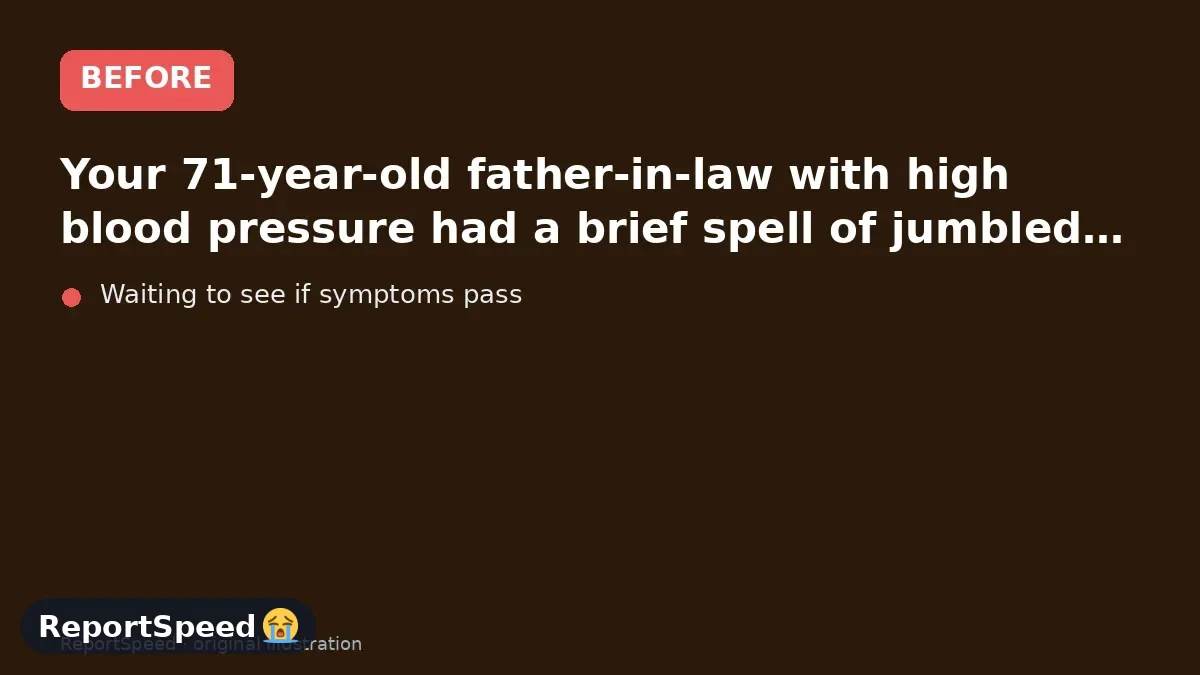
Your 71-year-old father-in-law with high blood pressure had a brief spell of jumbled speech that went away.
| Detail | Example |
|---|---|
| Signs seen | Face droop, slurred speech |
| Time started | 8:15 p.m. |
| Last known well | At dinner, 7:30 p.m. |
| Medicines | Blood thinners, blood pressure pills |
| Conditions | High blood pressure |
| Address | Full street address |
Causes & evidence
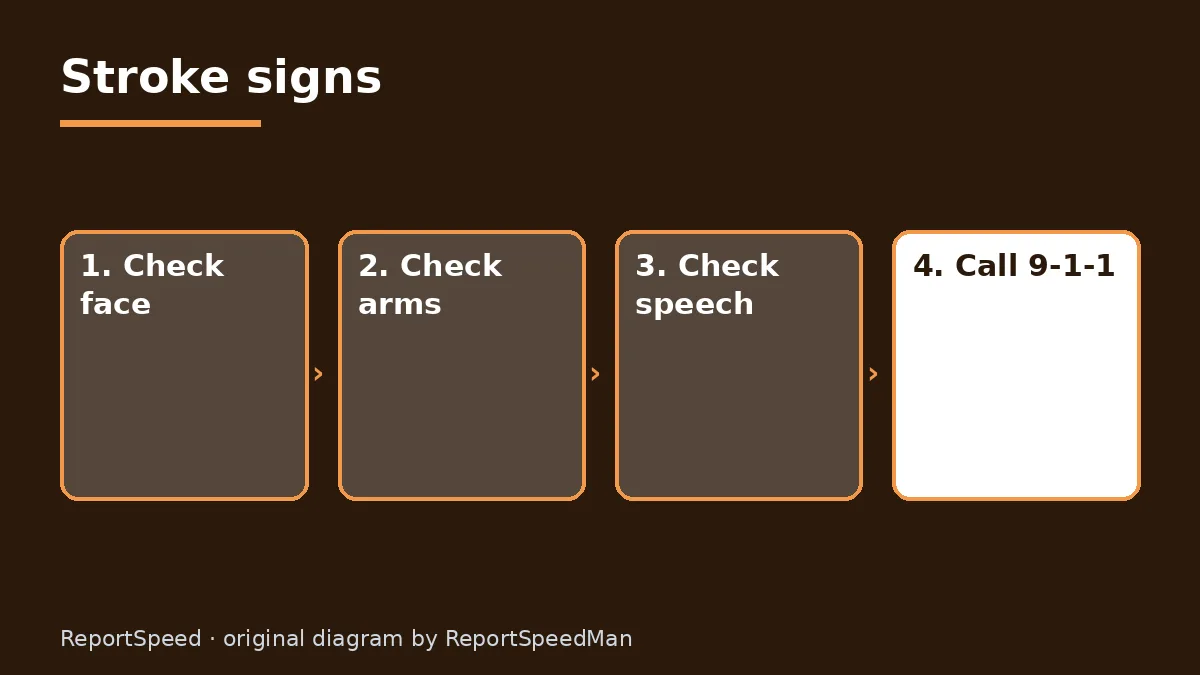
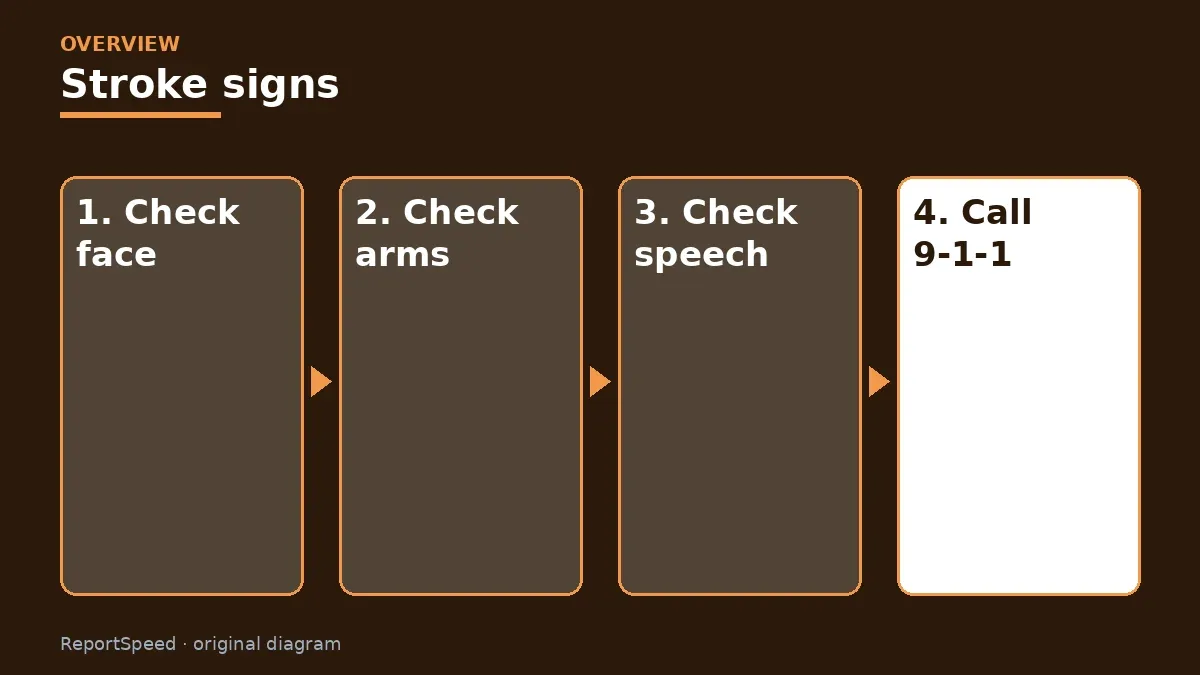
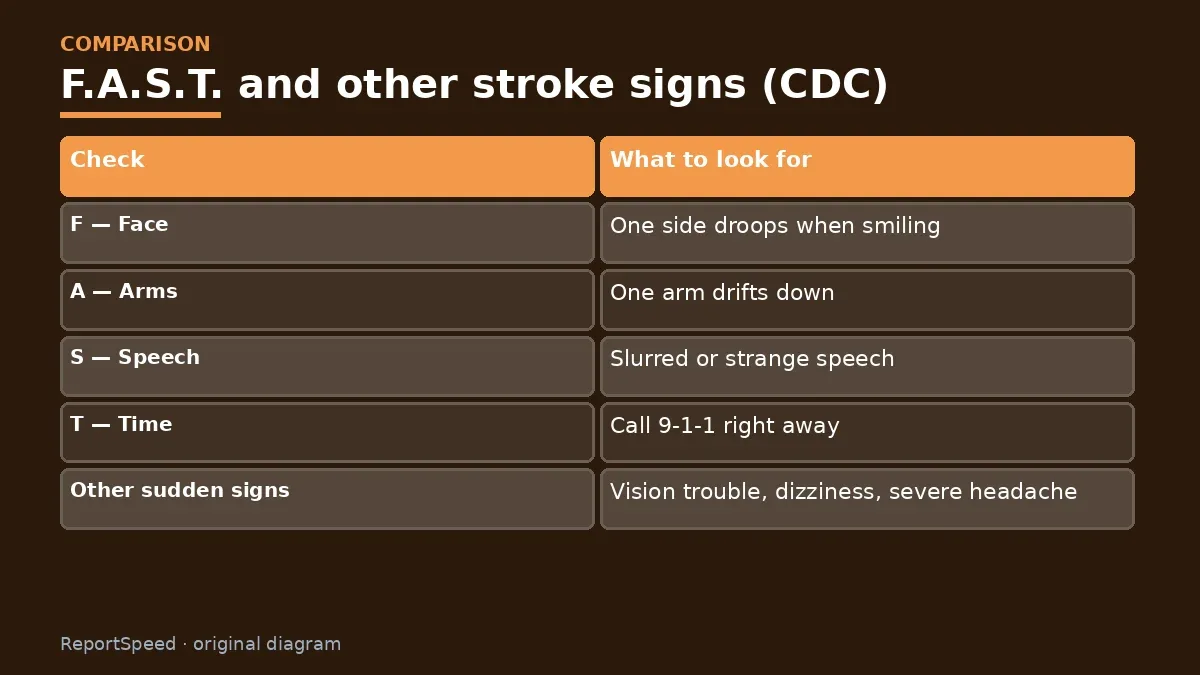
The CDC lists sudden signs of stroke: numbness or weakness in the face, arm or leg, especially on one side of the body; confusion, trouble speaking or understanding speech; trouble seeing in one or both eyes; trouble walking, dizziness, or loss of balance or coordination; and a severe headache with no known cause. The CDC's F.A.S.T. test checks Face (ask the person to smile; does one side droop?), Arms (raise both; does one drift down?), Speech (repeat a simple phrase; is it slurred or strange?) and Time (if you see any of these, call 9-1-1 right away). Note the time when symptoms first appeared, because it helps providers decide on treatment. The CDC advises calling 9-1-1 for an ambulance rather than driving, because paramedics can start care on the way. Brief symptoms that go away, sometimes called a transient ischemic attack, still need urgent medical attention.
Who this applies to: anyone, at any age. Risk rises with high blood pressure, diabetes, smoking, heart disease and prior stroke. Symptoms can differ, and some people have sudden dizziness or vision loss without face or arm signs.
Waiting to see if symptoms pass, as happened at dinner, is the most dangerous choice; a short spell can be a warning of a larger stroke.
What to do
| Check | What to look for |
|---|---|
| F — Face | One side droops when smiling |
| A — Arms | One arm drifts down |
| S — Speech | Slurred or strange speech |
| T — Time | Call 9-1-1 right away |
| Other sudden signs | Vision trouble, dizziness, severe headache |
| Note | Time symptoms began |
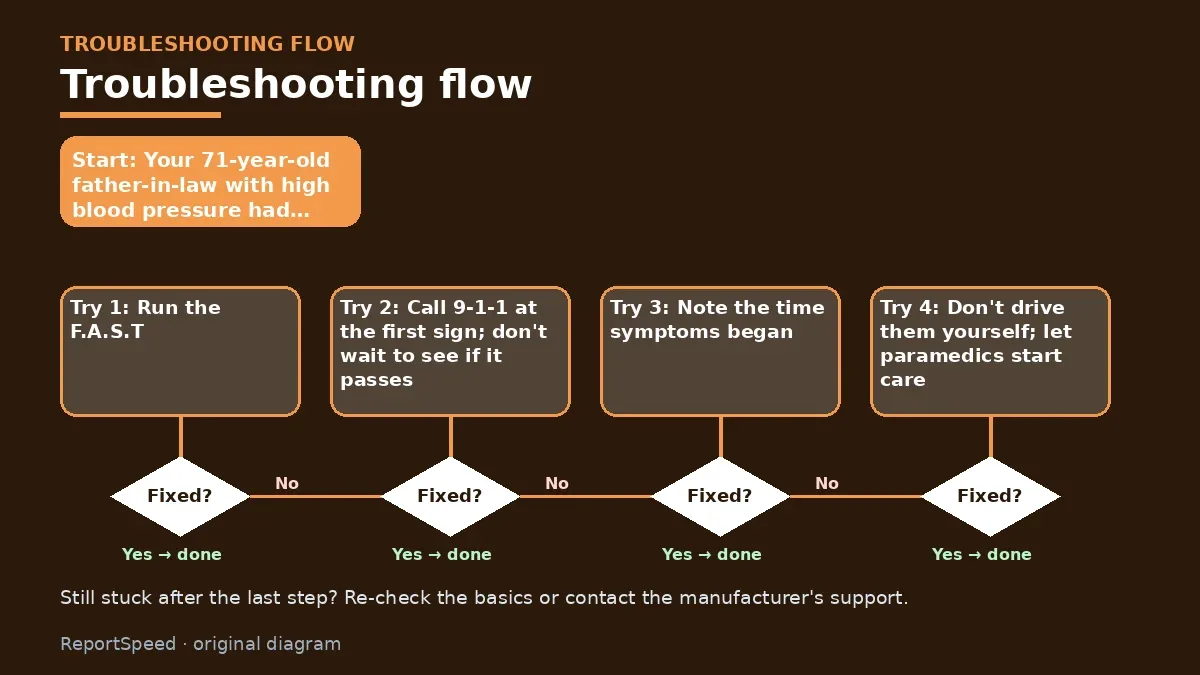
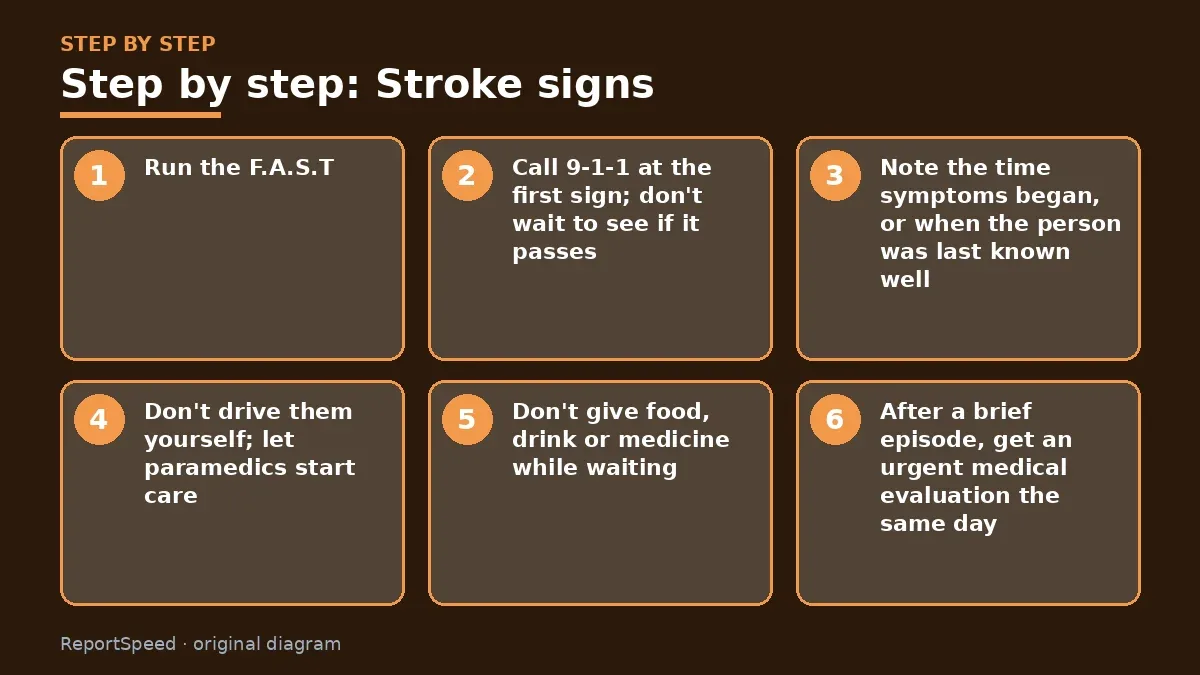
- Run the F.A.S.T. check as soon as something seems off.
- Call 9-1-1 at the first sign; don't wait to see if it passes.
- Note the time symptoms began, or when the person was last known well.
- Don't drive them yourself; let paramedics start care.
- Don't give food, drink or medicine while waiting.
- After a brief episode, get an urgent medical evaluation the same day.
Common mistakes:
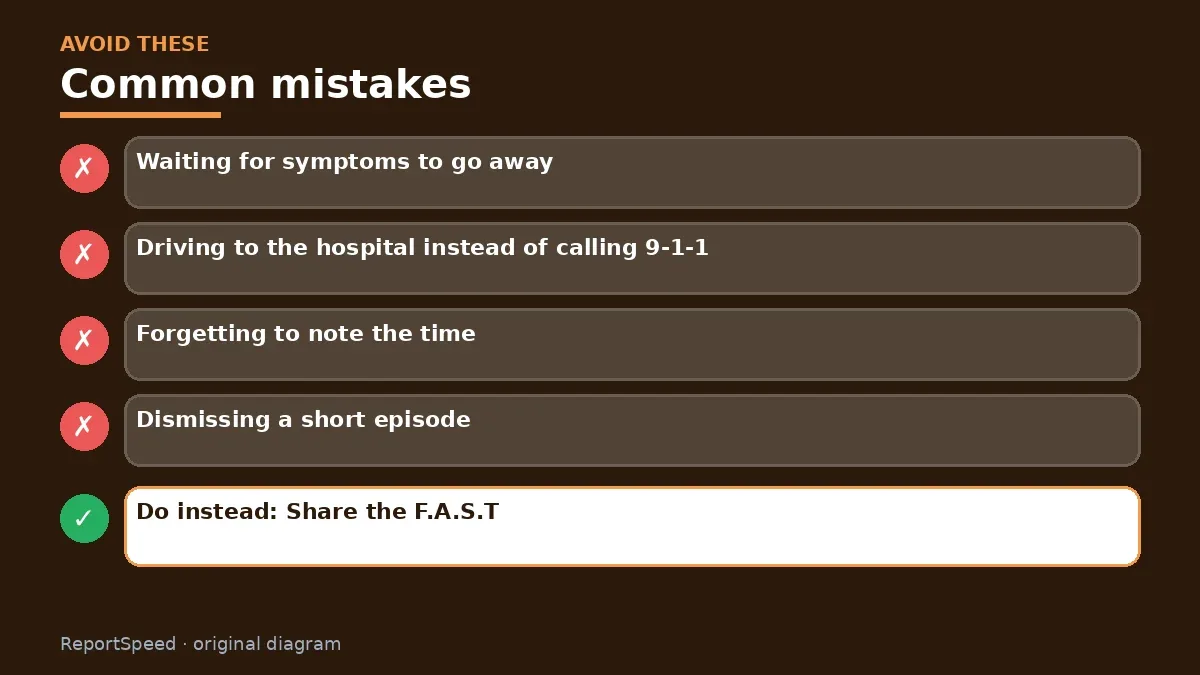
- Waiting for symptoms to go away
- Driving to the hospital instead of calling 9-1-1
- Forgetting to note the time
- Dismissing a short episode
ReportSpeedMan tip: Share the F.A.S.T. card with the whole family and put the 'last known well' idea on the fridge; it's the detail doctors ask first.
What I would actually do
I'd teach the family F.A.S.T., and after that dinner episode I'd book a same-day medical visit to evaluate it.
The trade-off people miss: calling 9-1-1 may feel like overreacting, but stroke treatment depends on time. A false alarm costs far less than a delay.
Did it work? How to check
Everyone at home can run F.A.S.T. and knows to call 9-1-1.
Quick FAQ
What if symptoms go away?
Still get urgent care.
Should I give aspirin?
Not unless told by 9-1-1 or a doctor.
Why note the time?
It guides treatment decisions.
Wrap-up: Use F.A.S.T., call 9-1-1 immediately, note the time, and treat even brief symptoms as an emergency.
Wiki: Common Cold vs. Flu and Sleep Basics and Insomnia.
Stroke signs: primary sources
Step-by-step photos
1. Before The problem 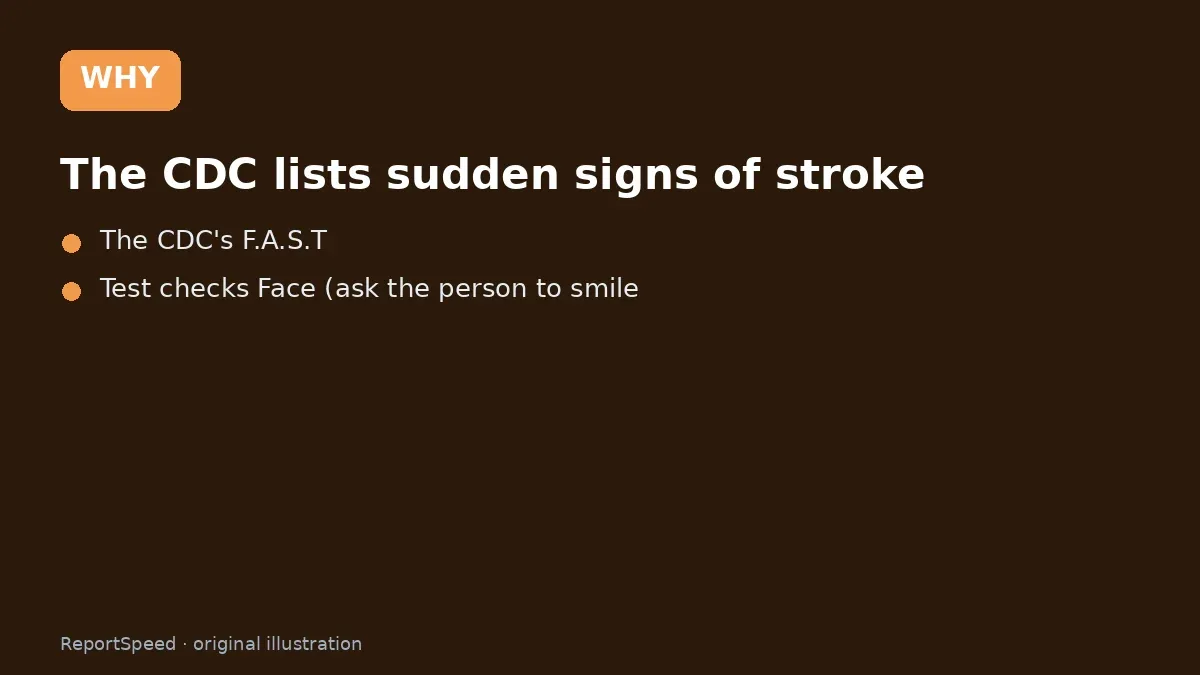
2. Why it happens The cause 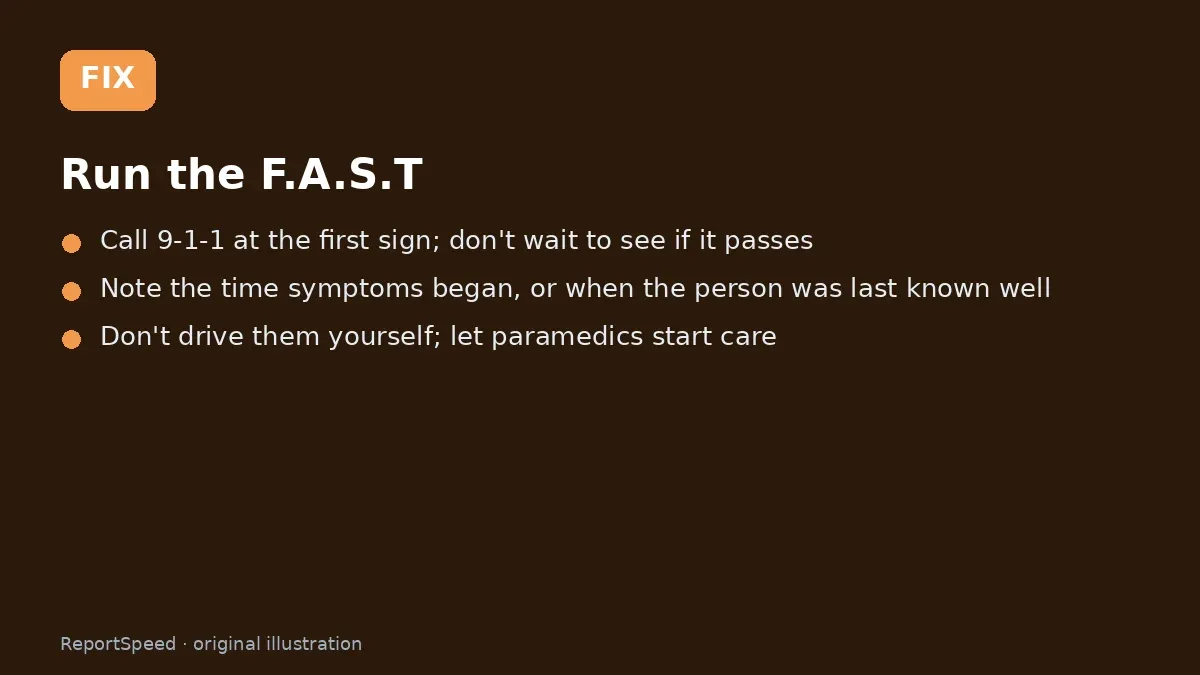
3. The fix The fix 
4. After The result
⚡ Speed Summary
- Use F.A.S.T., call 9-1-1 immediately, note the time, and treat even brief symptoms as an emergency.
- Share the F.A.S.T. card with the whole family and put the 'last known well' idea on the fridge; it's the detail doctors ask first.
- Waiting to see if symptoms pass, as happened at dinner, is the most dangerous choice; a short spell can be a warning of a larger stroke.

Was this answer helpful?
Tap a star to rate this answer.
Related questions
Is there lead in my tap water? How to check and lower your risk
Lead comes from plumbing, can't be seen, and isn't removed by boiling.
Rate itSolved
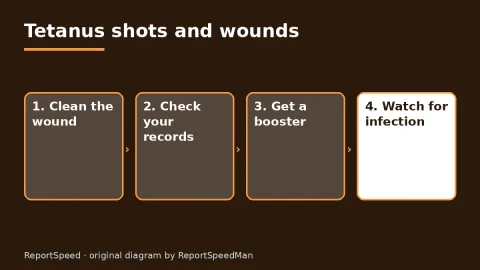
When do I need a tetanus shot? Booster timing and wounds
Boosters are every 10 years, or 5 years for dirty or puncture wounds.
Rate itSolved
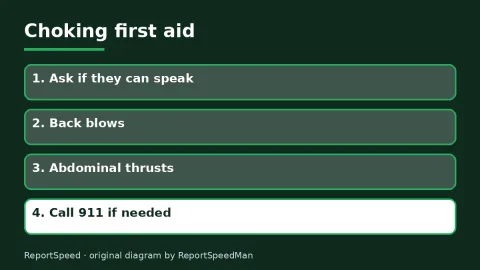
How to help someone who is choking: back blows and abdominal thrusts
Let a strong cough work.
Rate itSolved
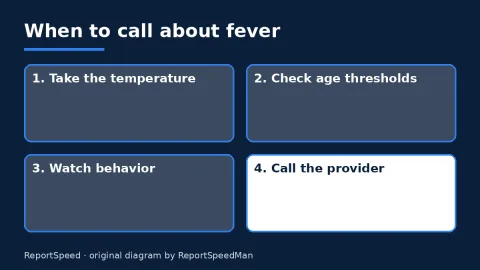
Fever: when to call the doctor for a child or adult
At 8 months, 102.2°F is the call-now line; your baby's 101.5°F means watch closely and call if it rises or warning signs appear.
Rate itSolved
Real experiences
No experiences yet. Be the first to share.