


Someone backed into me in a parking lot. No one is hurt and the damage looks small. The other driver wants to just swap numbers and skip insurance. What should I actually do at the scene, and do I need to call the police for a minor accident?
What to do right after a minor car accident

Concerns & risks
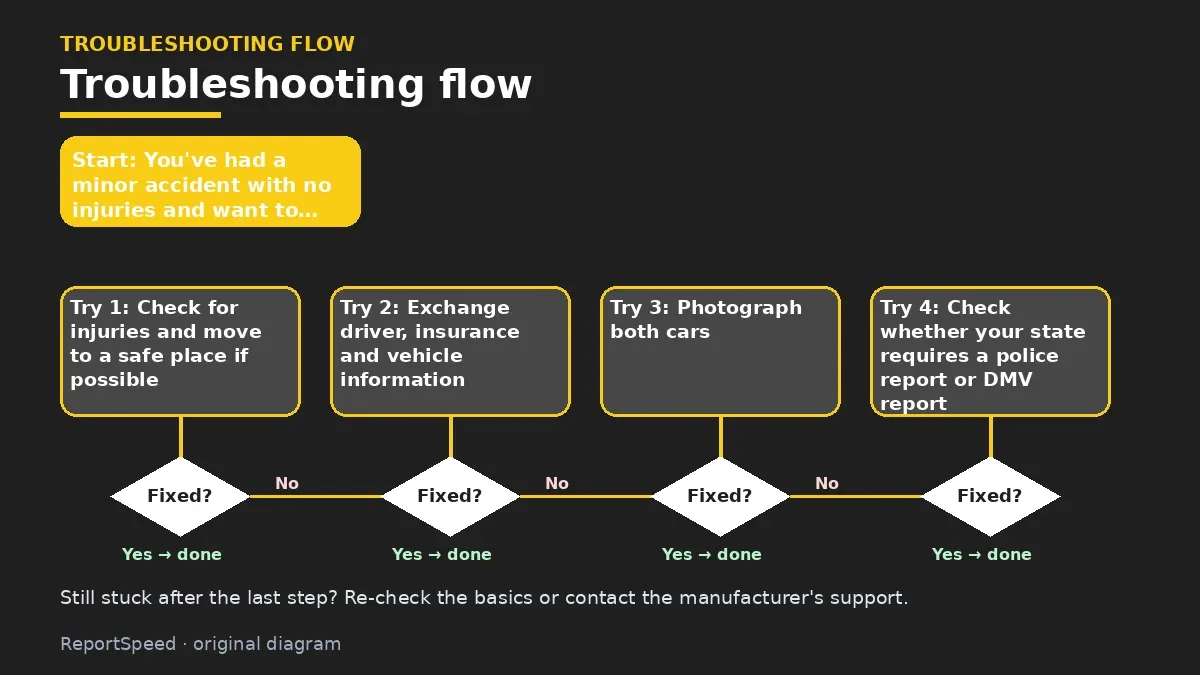
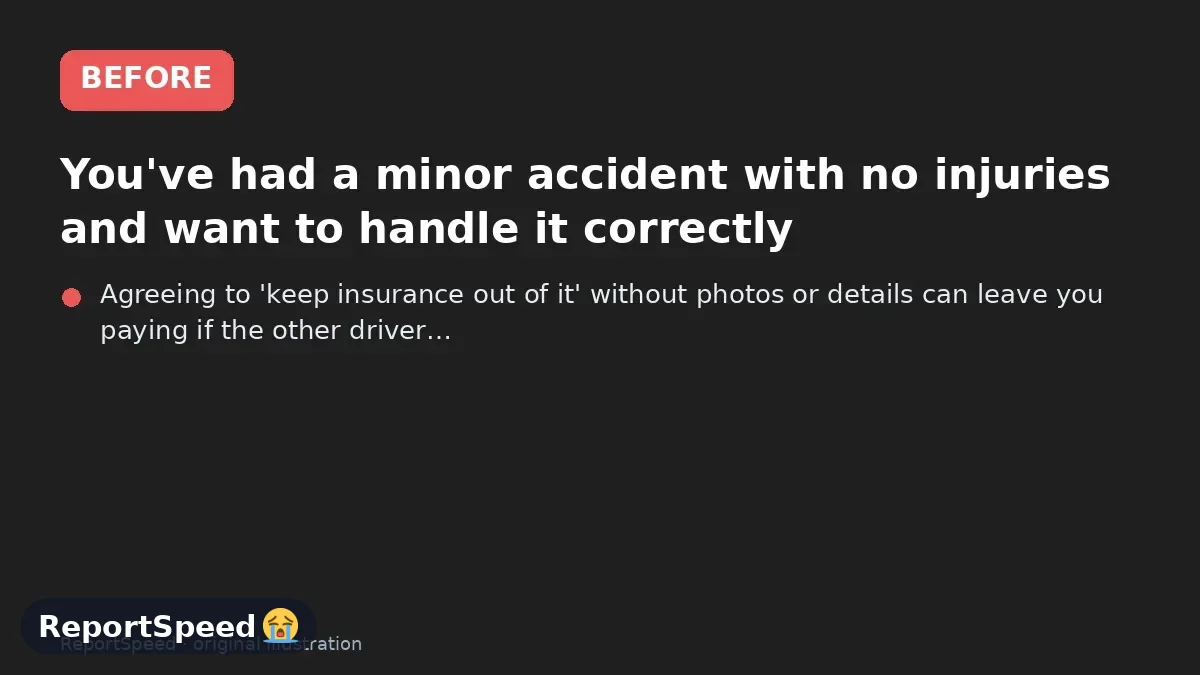
You've had a minor accident with no injuries and want to handle it correctly.
| Photo | Why |
|---|---|
| Both cars, wide | Shows positions |
| Close-up damage | Shows extent |
| Plates | Identifies vehicles |
| Insurance card and license | Confirms details |

Causes & evidence
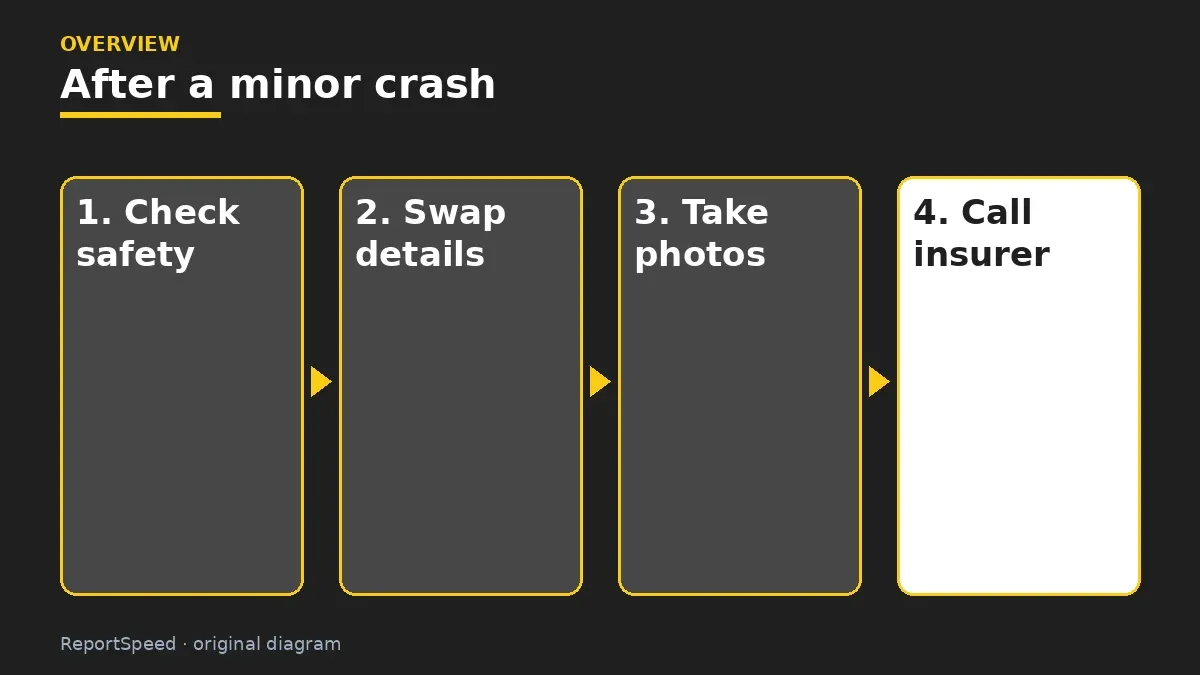
The National Association of Insurance Commissioners and state insurance regulators give similar guidance: first make sure everyone is safe and move to a safe spot if you can, call 911 if anyone is hurt, and exchange information with the other driver, including name, contact details, insurance company and policy number, license plate and vehicle details. Take photos of the vehicles, damage, the scene and the other driver's insurance card. Whether you must call the police or file a report depends on your state's rules, which often depend on injuries or damage amount, so check your state's requirements. Report the accident to your insurer promptly, as most policies require timely notice, even if you're not sure you'll file a claim.
Rules on reporting crashes to the police or DMV vary by state, often based on injuries or damage amounts. Your insurer can explain what it needs.
Agreeing to 'keep insurance out of it' without photos or details can leave you paying if the other driver changes their story.
What to do
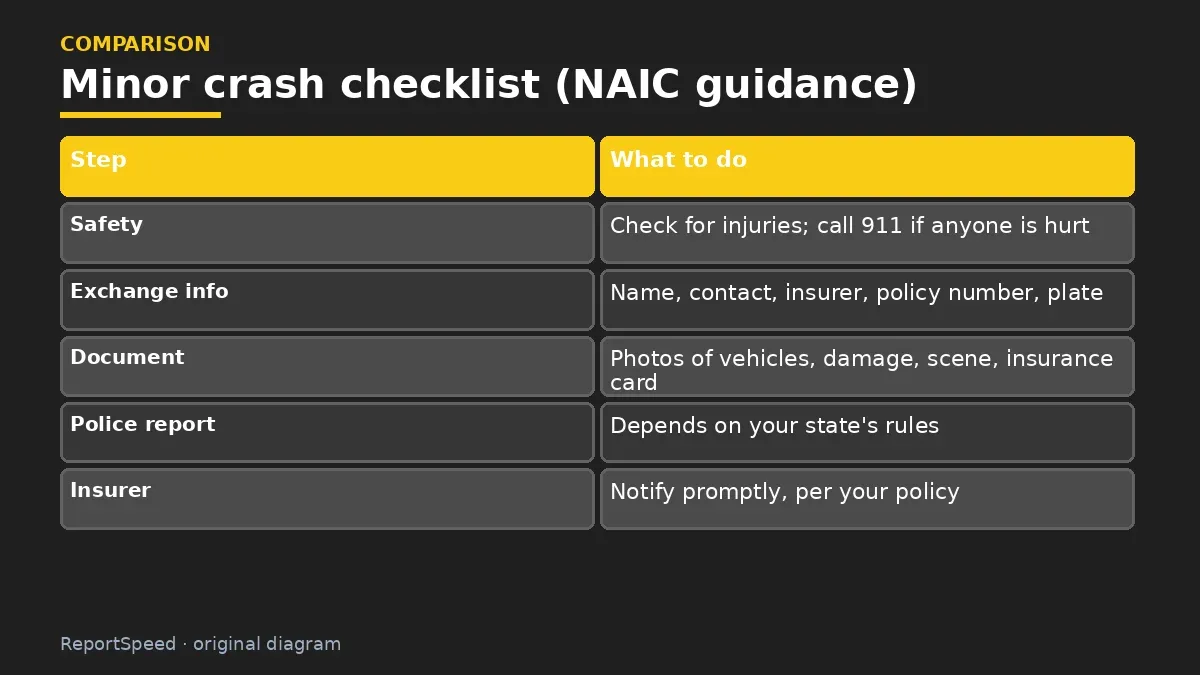
| Step | What to do |
|---|---|
| Safety | Check for injuries; call 911 if anyone is hurt |
| Exchange info | Name, contact, insurer, policy number, plate |
| Document | Photos of vehicles, damage, scene, insurance card |
| Police report | Depends on your state's rules |
| Insurer | Notify promptly, per your policy |
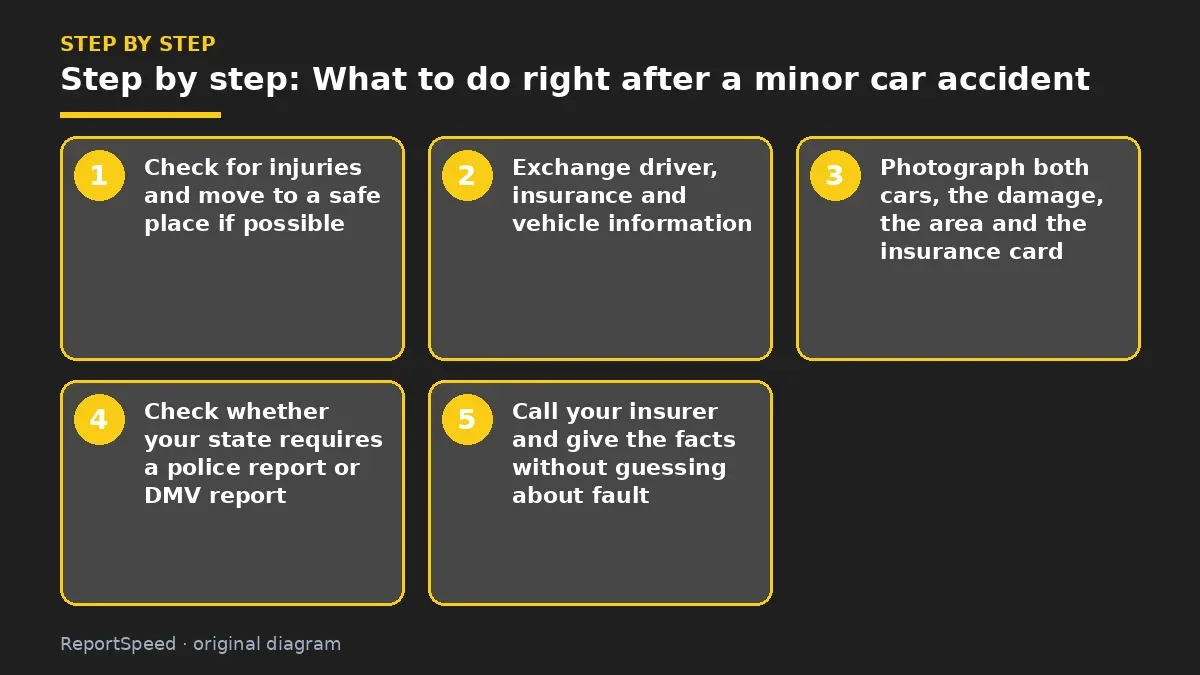
- Check for injuries and move to a safe place if possible.
- Exchange driver, insurance and vehicle information.
- Photograph both cars, the damage, the area and the insurance card.
- Check whether your state requires a police report or DMV report.
- Call your insurer and give the facts without guessing about fault.
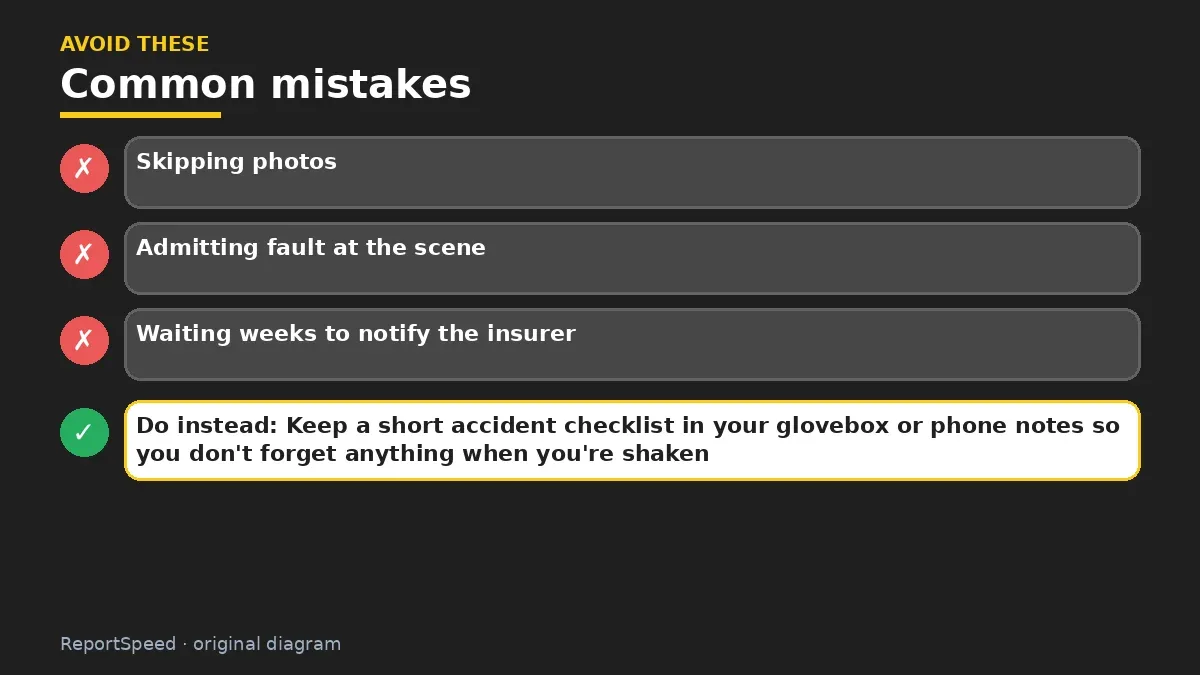
Common mistakes:
- Skipping photos
- Admitting fault at the scene
- Waiting weeks to notify the insurer
ReportSpeedMan tip: Keep a short accident checklist in your glovebox or phone notes so you don't forget anything when you're shaken.
What I would actually do
I'd take photos before moving the cars if it's safe, get the other driver's insurance card photo and tell my insurer the same day.
The trade-off people miss: skipping insurance to protect your premium can backfire if hidden damage or a later injury claim appears and you have no record.
Checking that it worked
You have the other driver's details, clear photos and a claim number from your insurer.
Quick FAQ
Should I admit fault?
Stick to facts; let insurers decide.
What if the other driver has no insurance?
Check your uninsured motorist coverage.
Should I see a doctor?
If you feel any pain, get checked.
Wrap-up: Stay safe, swap details, take photos and tell your insurer. Small crashes go smoothly when the facts are written down at the time.
Wiki: Vehicle Recalls and Emergency Fund.
What to do right after a minor car accident: official sources I checked
Step-by-step photos
1. Before The problem 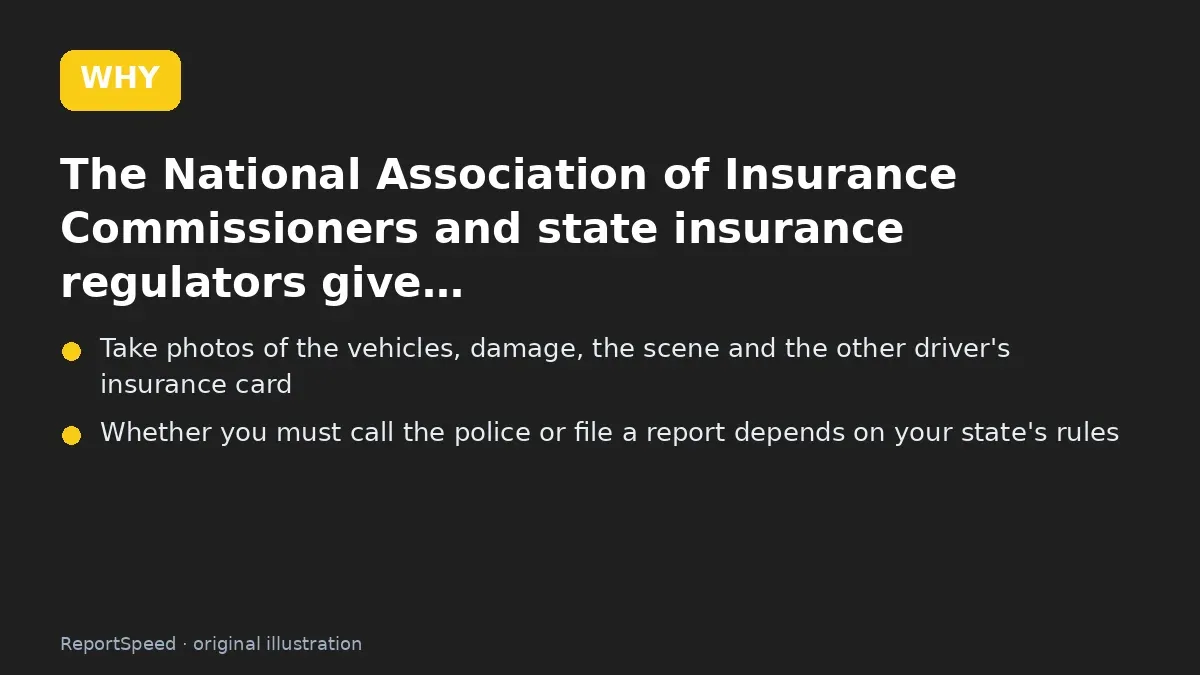
2. Why it happens The cause 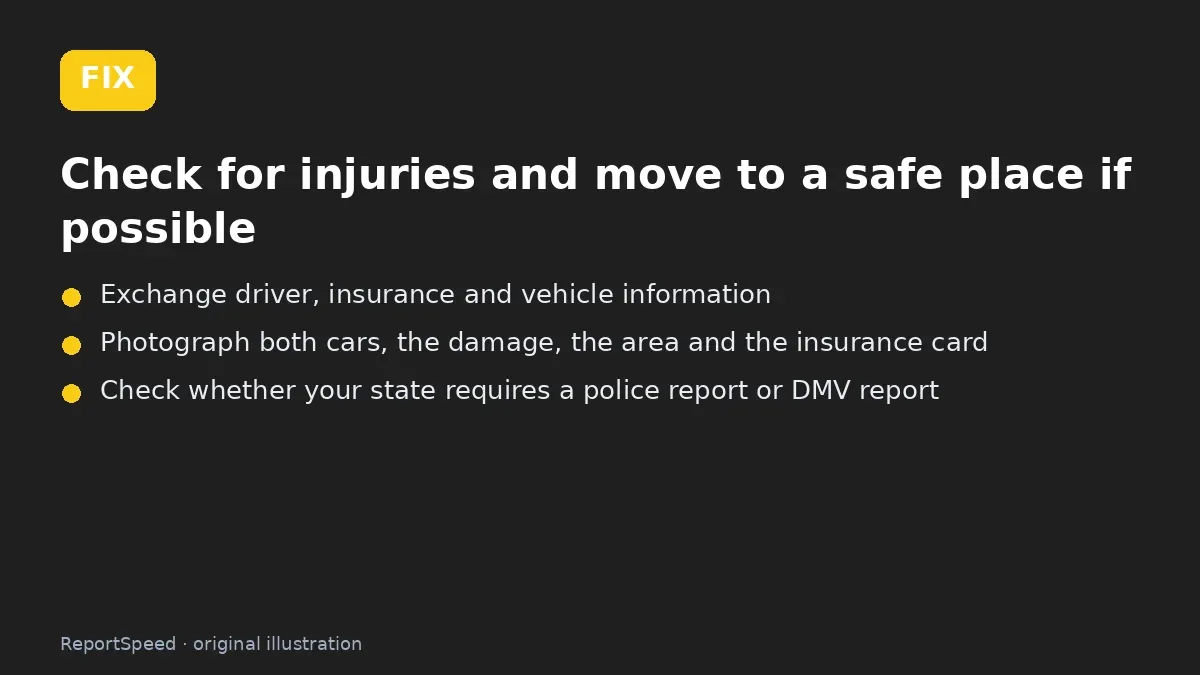
3. The fix The fix 
4. After The result
⚡ Speed Summary
- Stay safe, swap details, take photos and tell your insurer.
- Keep a short accident checklist in your glovebox or phone notes so you don't forget anything when you're shaken.
- Agreeing to 'keep insurance out of it' without photos or details can leave you paying if the other driver changes their story.

Was this answer helpful?
Tap a star to rate this answer.
Related questions

How far should I sit from the steering wheel airbag?
Keep 10 inches from the air bag cover, tilt the wheel toward your chest, and keep kids 12 and under in the back.
Rate itSolved
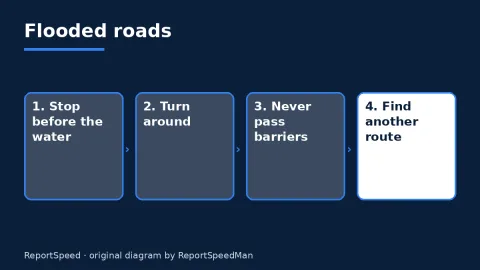
Is it safe to drive through a flooded road? How much water can float a car
Never drive into flood water; a foot of rushing water can carry most cars.
Rate itSolved
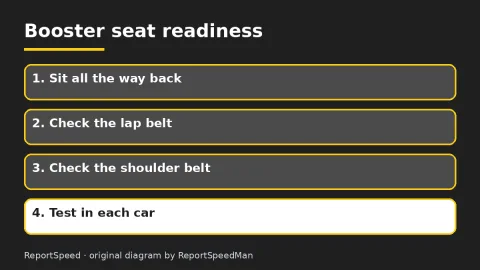
When can my child stop using a booster seat?
Keep the booster until the seat belt fits across the thighs and chest, and keep kids 12 and under in the back.
Rate itSolved
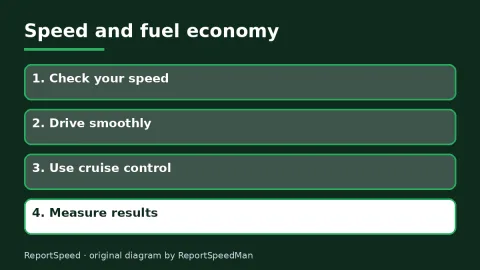
Does driving faster really waste gas? Speed and fuel economy
Above 50 mph mileage drops quickly, roughly like $0.30 more per gallon for each extra 5 mph.
Rate itSolved
Real experiences
No experiences yet. Be the first to share.