


I just turned 45 and my doctor mentioned colon cancer screening. I thought that started at 50. Do I really need it now, and do I have to get a colonoscopy, or are there other options?
When should I start colorectal cancer screening?
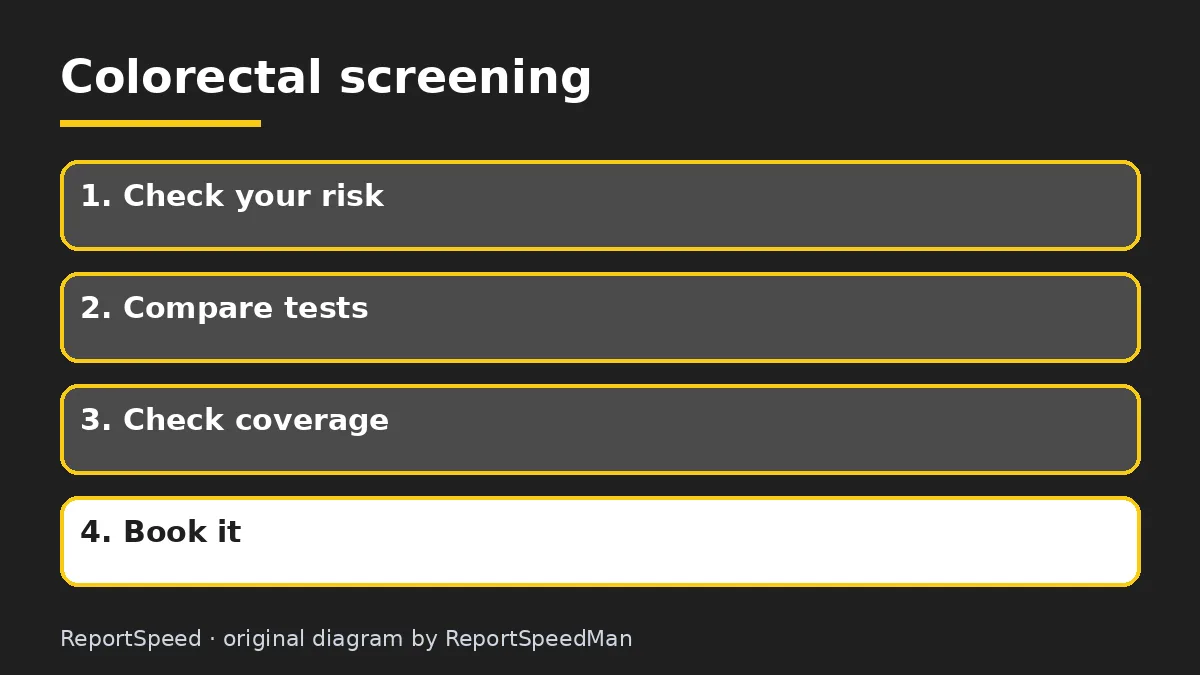
Concerns & risks
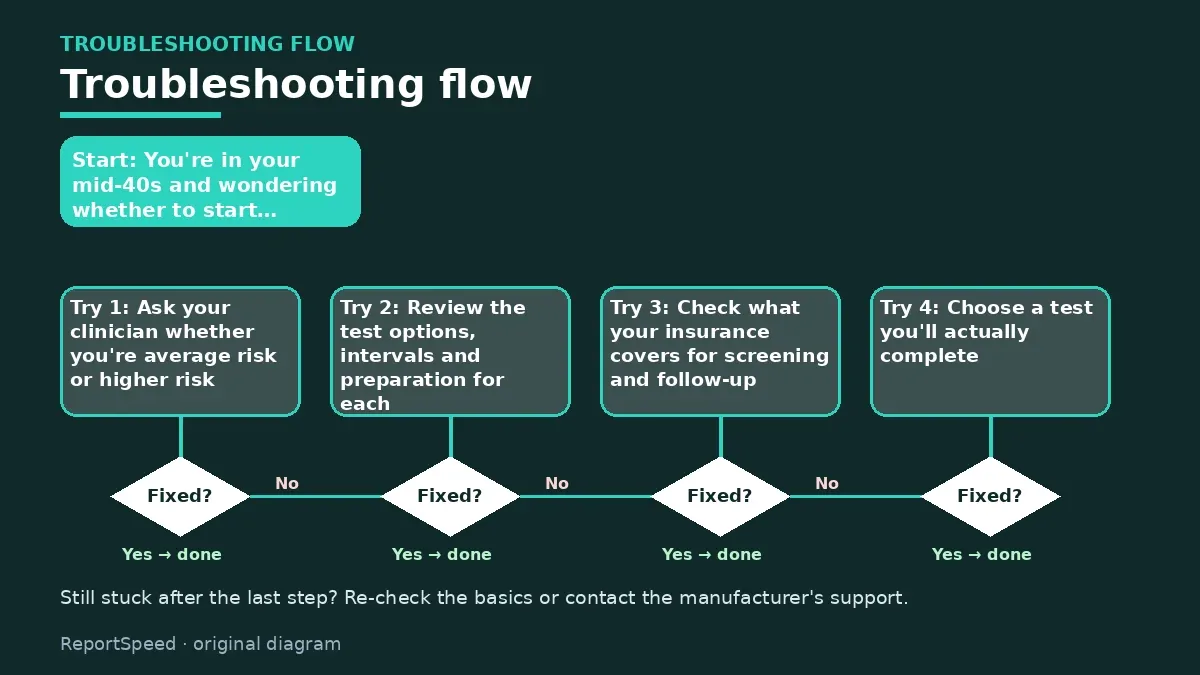
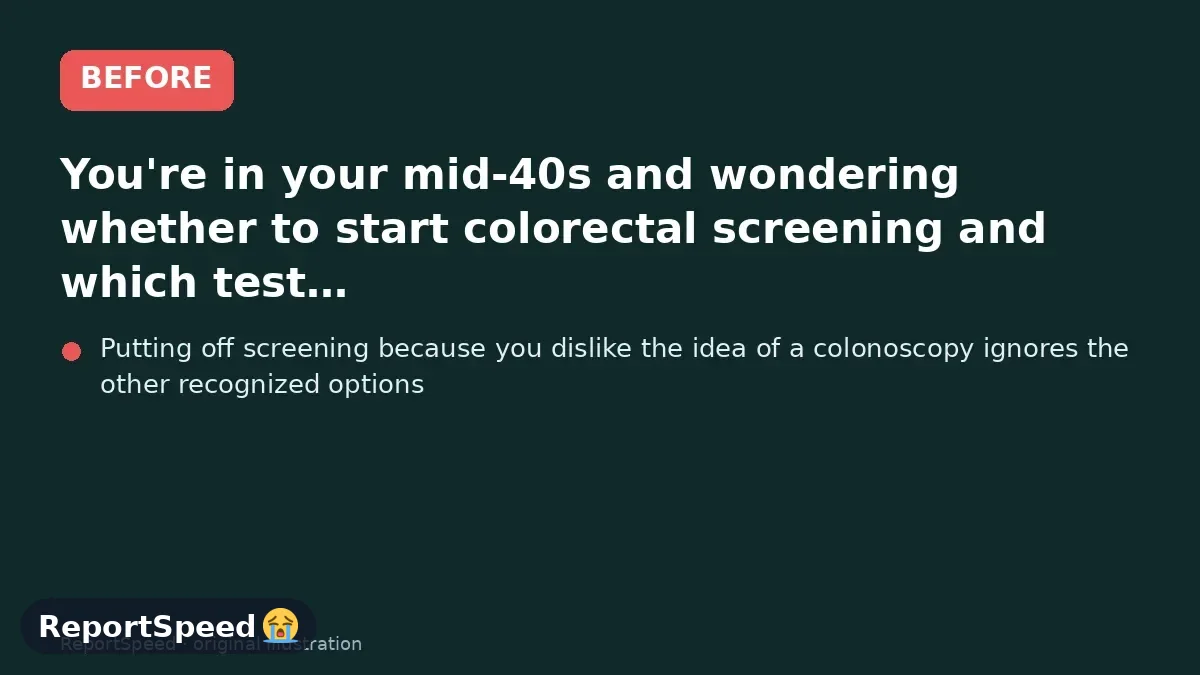
You're in your mid-40s and wondering whether to start colorectal screening and which test to choose.
| Question | Why ask |
|---|---|
| Am I average risk? | Sets your start age |
| Which tests suit me? | Several options exist |
| What does coverage include? | Follow-up costs |
| When is my next one? | Intervals differ |

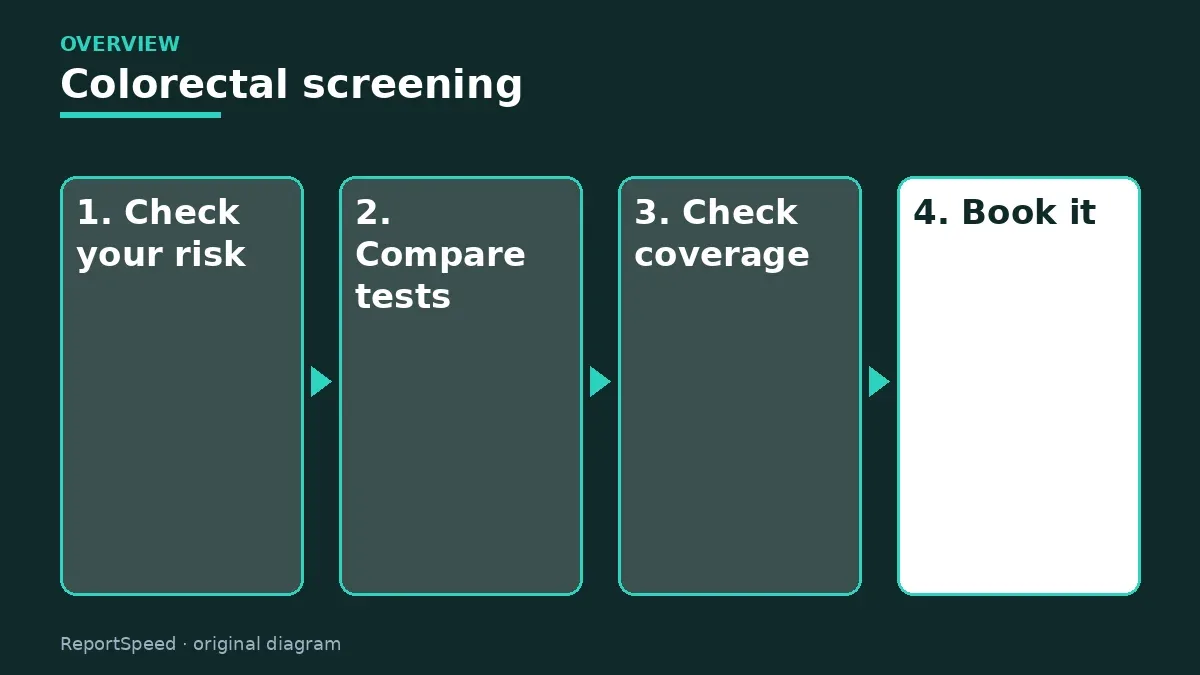
Causes & evidence
The U.S. Preventive Services Task Force recommends screening for colorectal cancer in all adults aged 45 to 75. For adults aged 76 to 85, it recommends that clinicians selectively offer screening based on overall health, prior screening history and personal preferences. The recommendation covers average-risk adults without symptoms. Several test options are recognized, including stool-based tests done at home and direct visualization tests such as colonoscopy, each with different intervals and follow-up needs. A positive stool test needs a follow-up colonoscopy. People with a family history, certain conditions or symptoms such as bleeding should talk with a clinician, as different advice may apply.
People with higher risk, such as a strong family history, may be advised to start earlier or screen more often. Symptoms such as bleeding or persistent changes need medical attention regardless of screening.
Putting off screening because you dislike the idea of a colonoscopy ignores the other recognized options.
What to do

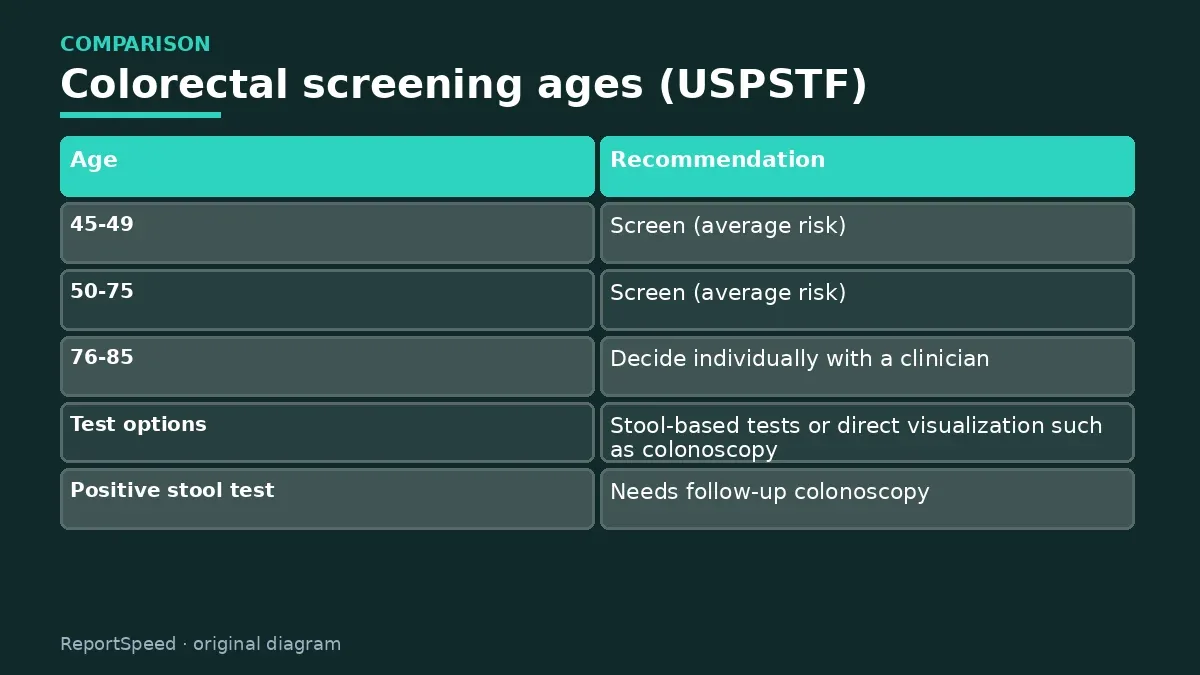
| Age | Recommendation |
|---|---|
| 45-49 | Screen (average risk) |
| 50-75 | Screen (average risk) |
| 76-85 | Decide individually with a clinician |
| Test options | Stool-based tests or direct visualization such as colonoscopy |
| Positive stool test | Needs follow-up colonoscopy |
- Ask your clinician whether you're average risk or higher risk.
- Review the test options, intervals and preparation for each.
- Check what your insurance covers for screening and follow-up.
- Choose a test you'll actually complete.
- Put the next screening date in your calendar.
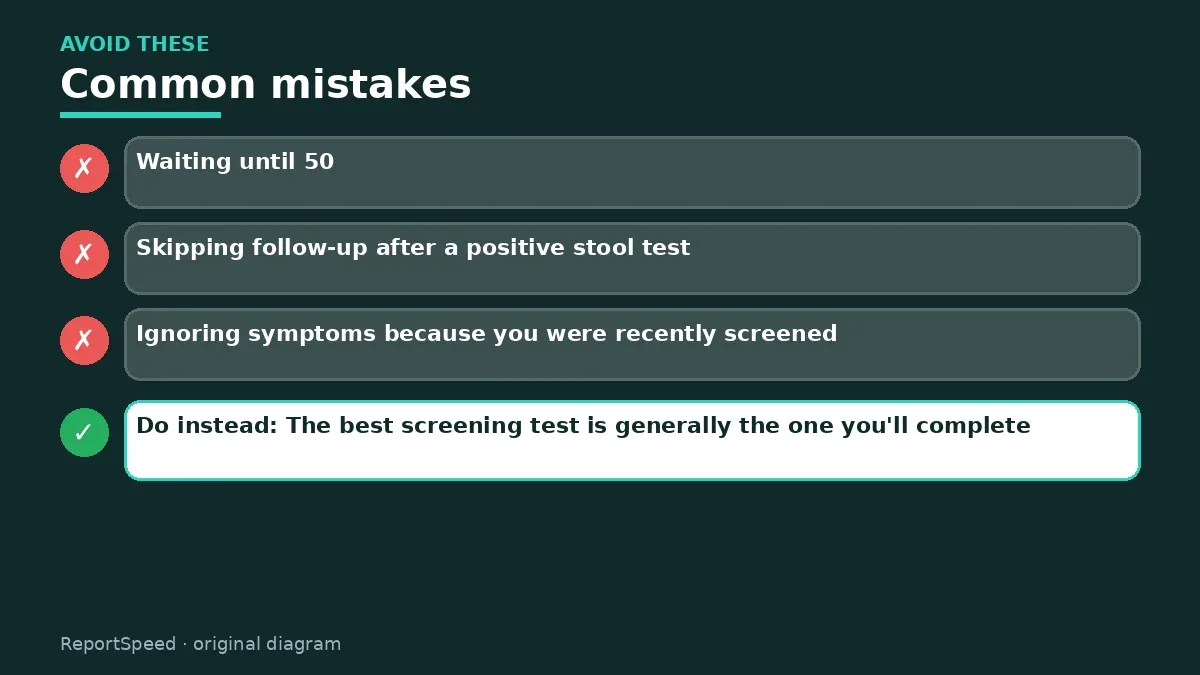
Common mistakes:
- Waiting until 50
- Skipping follow-up after a positive stool test
- Ignoring symptoms because you were recently screened
ReportSpeedMan tip: The best screening test is generally the one you'll complete. Ask about the at-home options if colonoscopy is a barrier.
What I would actually do
I'd ask my clinician which test fits my risk and preferences, pick one I'll actually complete, and book the next date before leaving.
The trade-off people miss: at-home stool tests are easier up front but need repeating more often, and a positive result means a colonoscopy anyway.
Proof that it worked
You've completed a screening test and your next date is in the calendar.
Quick FAQ
Is 45 too young?
No; it's the recommended start for average risk.
Do I have to have a colonoscopy?
Other tests are options.
What if my stool test is positive?
You need a follow-up colonoscopy.
Wrap-up: Average-risk adults should start at 45. Talk with your clinician, choose a test and follow through on any follow-up.
Wiki: Sleep Basics and Insomnia and Common Cold vs. Flu.
When should I start colorectal cancer screening: primary sources
Step-by-step photos
1. Before The problem 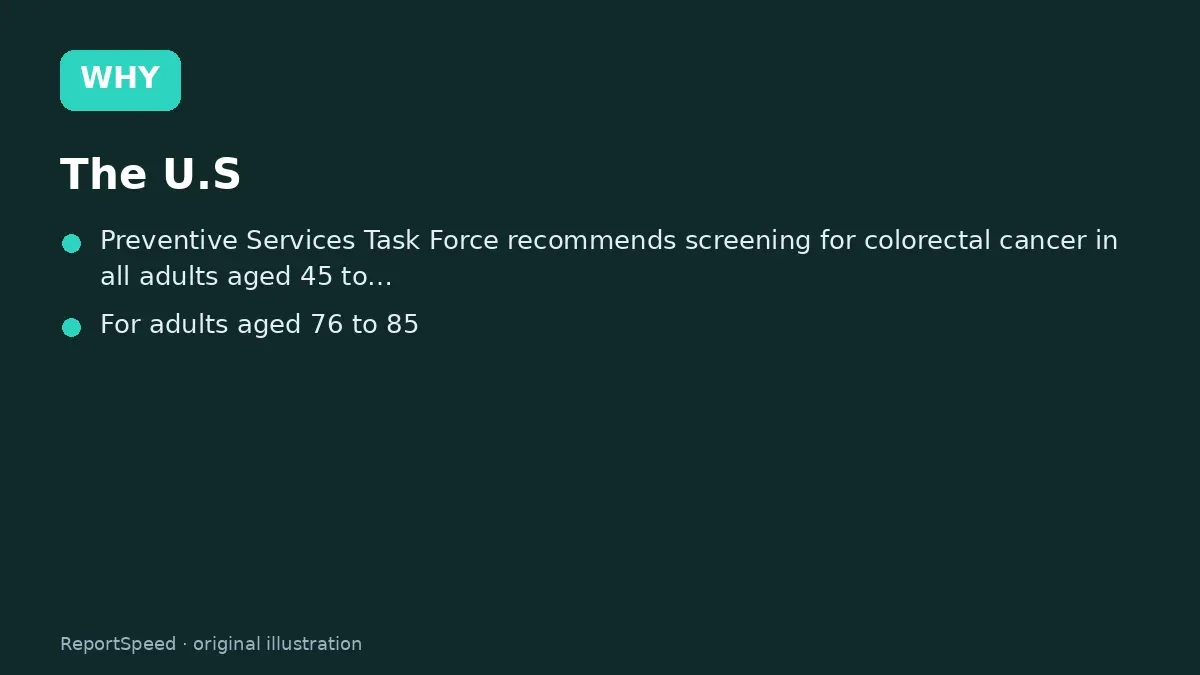
2. Why it happens The cause 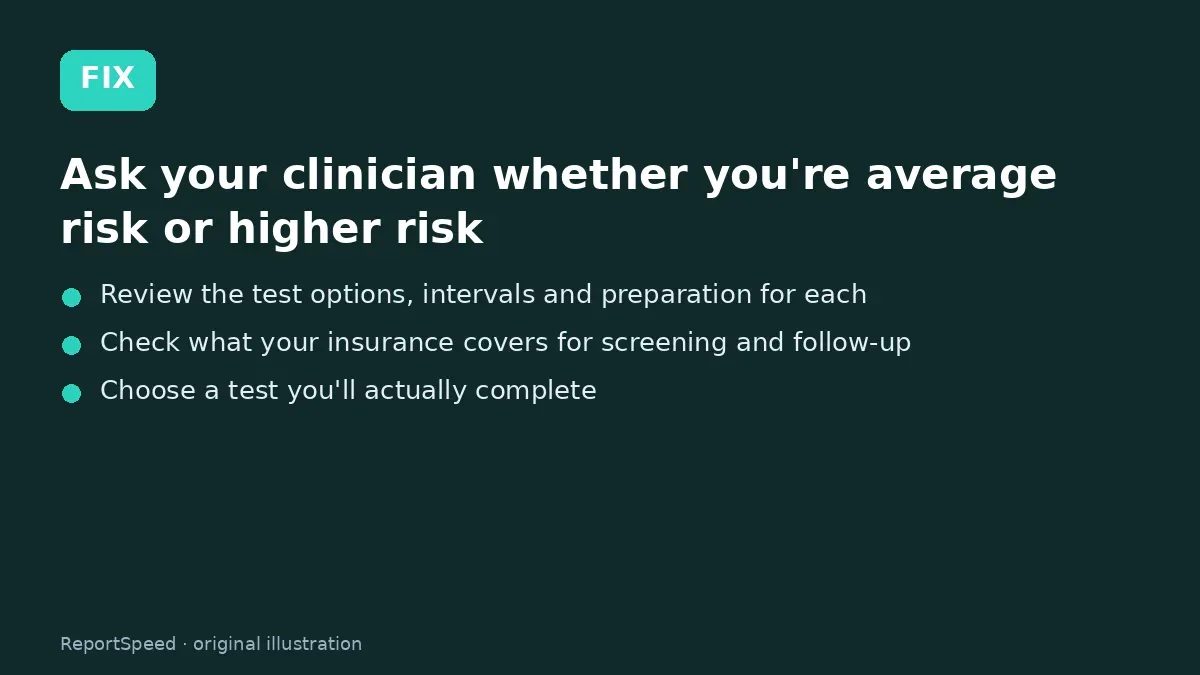
3. The fix The fix 
4. After The result
⚡ Speed Summary
- Average-risk adults should start at 45.
- The best screening test is generally the one you'll complete. Ask about the at-home options if colonoscopy is a barrier.
- Putting off screening because you dislike the idea of a colonoscopy ignores the other recognized options.

Was this answer helpful?
Tap a star to rate this answer.
Related questions
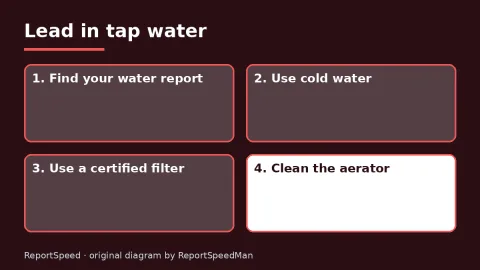
Is there lead in my tap water? How to check and lower your risk
Lead comes from plumbing, can't be seen, and isn't removed by boiling.
Rate itSolved
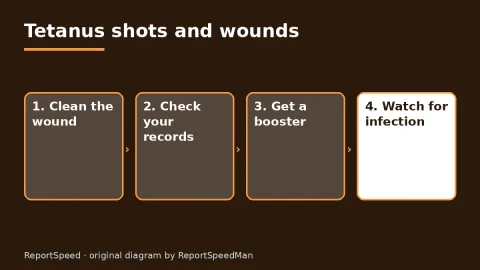
When do I need a tetanus shot? Booster timing and wounds
Boosters are every 10 years, or 5 years for dirty or puncture wounds.
Rate itSolved
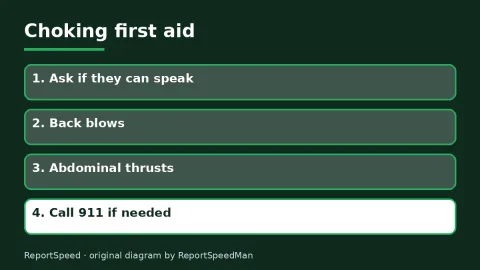
How to help someone who is choking: back blows and abdominal thrusts
Let a strong cough work.
Rate itSolved
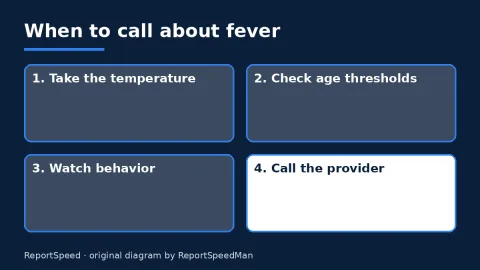
Fever: when to call the doctor for a child or adult
At 8 months, 102.2°F is the call-now line; your baby's 101.5°F means watch closely and call if it rises or warning signs appear.
Rate itSolved
Real experiences
No experiences yet. Be the first to share.